How to Read Skincare Ingredient Lists Like a Pro
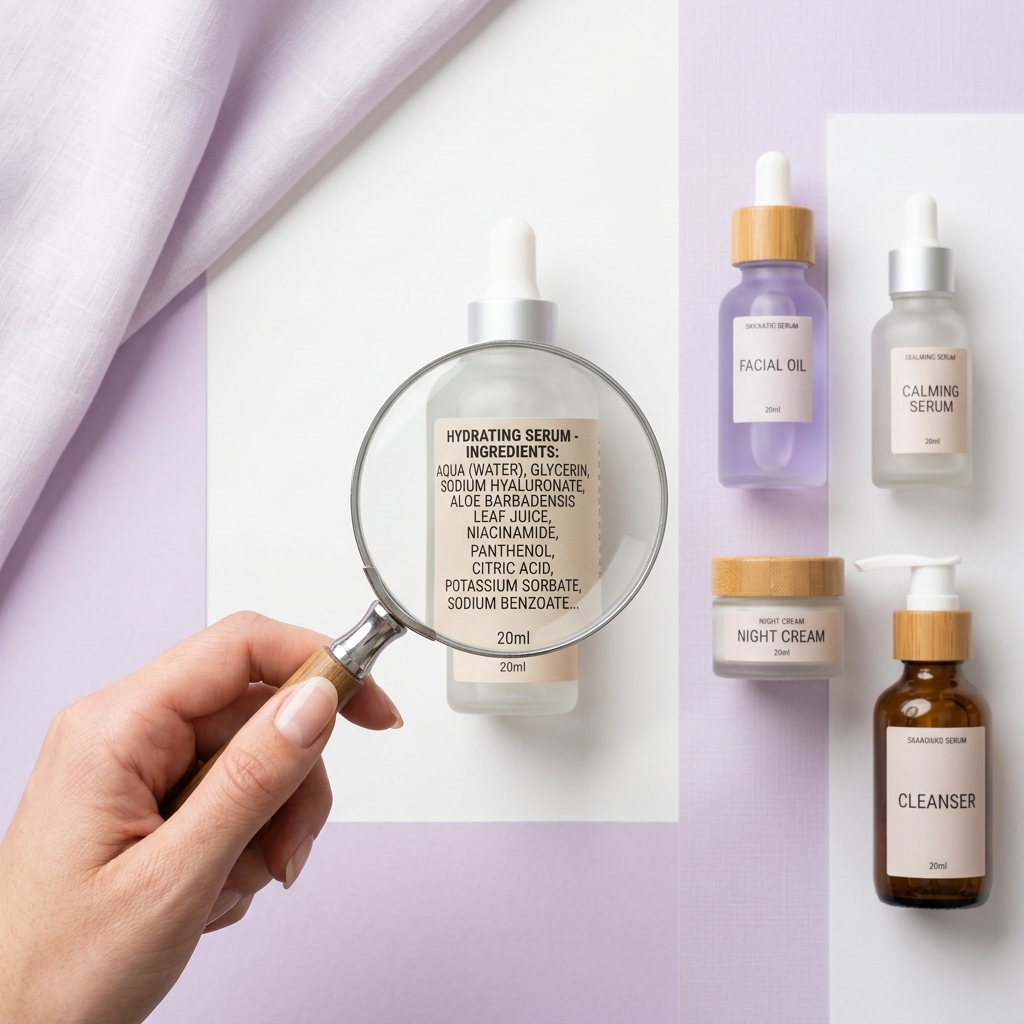
If you have ever turned a skincare product around and stared blankly at the ingredient list, you are not alone. Those long strings of chemical names can feel like reading a foreign language. However, learning to decode ingredient lists is one of the most valuable skills you can develop for managing skin allergies, avoiding triggers, and making informed product choices. This guide will walk you through everything you need to know to read skincare ingredient labels like a professional.
Understanding INCI Naming
Skincare and cosmetic products use a standardised naming system called INCI, which stands for International Nomenclature of Cosmetic Ingredients. This system was developed to ensure consistency across products regardless of where they are sold. Under INCI rules, ingredients must be listed using their official Latin or scientific names rather than common names or marketing terms.
This is why you will see "Aqua" instead of "Water," "Glycerin" instead of "Glycerine," and "Tocopheryl Acetate" instead of "Vitamin E Acetate" on product labels. For plant-derived ingredients, the INCI system uses the Latin botanical name followed by the part of the plant used. For example, "Aloe Barbadensis Leaf Juice" is the INCI name for aloe vera gel. While this system can seem intimidating at first, it actually makes it easier to identify ingredients once you learn the naming patterns.
The Concentration Rule
One of the most important things to understand about ingredient lists is that ingredients are listed in descending order of concentration. The first ingredient on the list is present in the highest amount, and the last ingredient is present in the lowest amount. This rule applies to all ingredients present at concentrations above 1%.
This means that the first five ingredients typically make up the vast majority of the product formula. If a potentially irritating or allergenic ingredient appears in the first five positions, it is present in a significant concentration and more likely to cause problems. Conversely, an allergen listed near the end of a long ingredient list is present at a very low concentration and may not trigger a reaction in most people.
Ingredients present at concentrations of 1% or below can be listed in any order, which is why you will sometimes see groups of ingredients at the end of a label that appear to be organised alphabetically or by category rather than by concentration. Common ingredients that fall below the 1% threshold include preservatives, fragrances, colourants, and active ingredients that are effective at very low concentrations.
Identifying Hidden Acrylates
One of the biggest challenges for people with acrylate sensitivities is that acrylates often appear under names that do not obviously contain the word "acrylate." Learning to recognise these hidden names is essential for effective avoidance. Common acrylate-containing ingredients to watch for include any ingredient ending in "-acrylate" or "-acrylamide," ingredients containing "methacrylate," carbomers (which are polyacrylic acid derivatives), and certain copolymers and crosspolymers that may use acrylate monomers.
Particularly tricky are ingredients like "acrylates copolymer," "acrylates/C10-30 alkyl acrylate crosspolymer," "polyacrylate-3," and "polyacrylamide." These are often used as film formers, texture enhancers, or stabilisers in products where you might not expect to find acrylates, such as moisturisers, sunscreens, and hair products. Using an ingredient analyser like Acrylis can help catch these hidden sources that might be missed during a manual review.
Understanding Ingredient Variations
The same ingredient can appear under slightly different names on different product labels, which adds another layer of complexity. For example, "dimethicone" and "polydimethylsiloxane" are the same ingredient, as are "tocopherol" and "vitamin E." Regional variations also exist: "aluminium" (European spelling) and "aluminum" (American spelling) refer to the same element.
For acrylates specifically, be aware that variations like "ethyl acrylate" and "ethyl 2-propenoate" (the IUPAC name) refer to the same compound. Similarly, "2-hydroxyethyl methacrylate" may also appear as "HEMA" or "2-hydroxyethyl 2-methylpropenoate." Building familiarity with these naming variations will make your ingredient screening more thorough and reliable.
Practical Tips for Using Ingredient Analysers
To get the most accurate results when using an ingredient analyser like Acrylis, follow these best practices. First, copy the entire ingredient list exactly as it appears on the product label, including all commas and formatting. Some analysers parse ingredients by splitting on commas, so preserving the original formatting ensures accurate parsing. Second, include any sub-ingredients listed in parentheses, as these may contain hidden acrylates or fungal acne triggers.
Third, check products after any formula change. Brands frequently reformulate their products, and an ingredient list that was safe six months ago may contain new allergens today. This is especially common with seasonal product variations, "new and improved" formulations, and products from brands that source ingredients from multiple suppliers. Finally, if you are checking a product for both acrylates and fungal acne triggers, make sure to enable both analysis options in the tool, as some ingredients may be safe from one perspective but problematic from the other.
Building Your Personal Ingredient Knowledge
As you check more products, you will naturally build a mental database of common safe and unsafe ingredients. This knowledge becomes increasingly valuable over time, allowing you to quickly scan labels and identify potential problems without needing to check every product through an analyser. Keep a personal list of ingredients you know you react to, as well as products you have already verified as safe, to speed up future shopping trips. Many people find it helpful to take photos of ingredient lists on their phone for later reference or analysis.