The Science Behind Malassezia and Fatty Acids
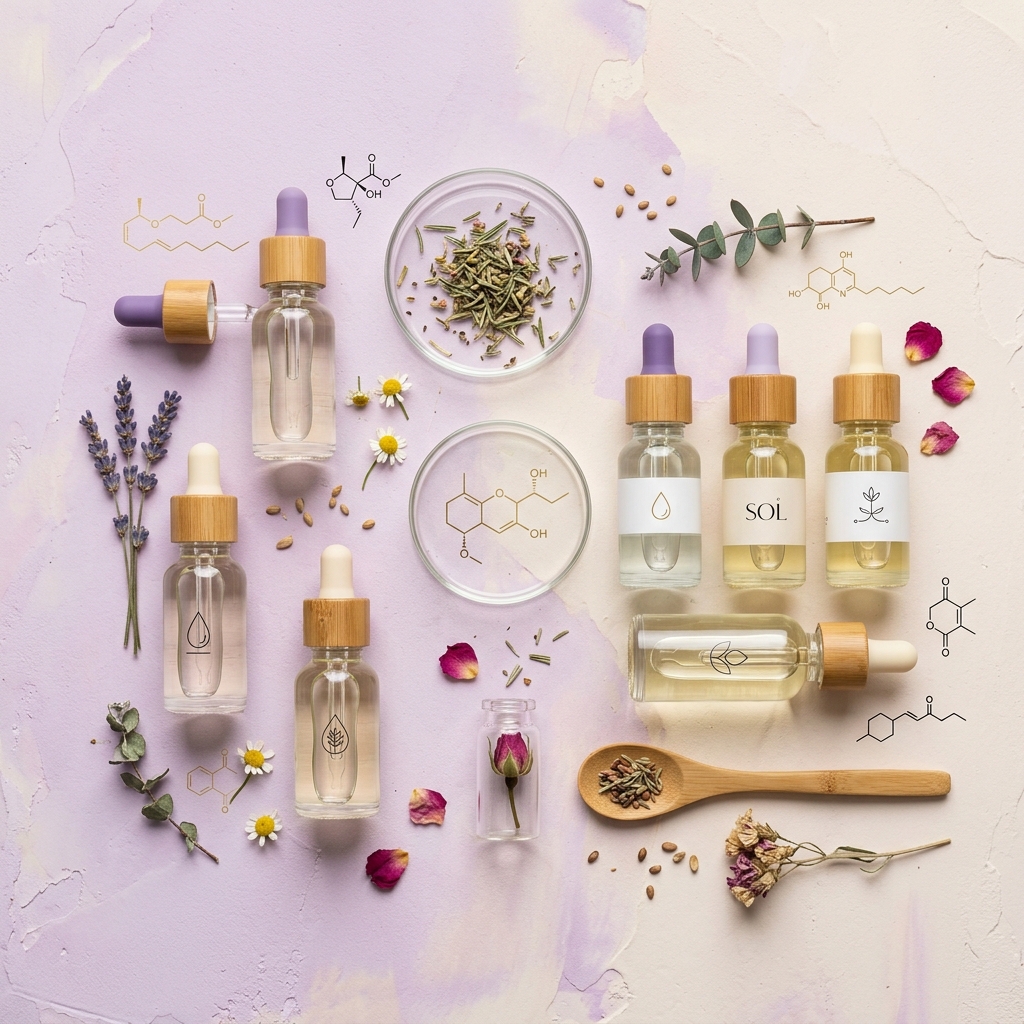
To effectively manage fungal acne, it helps to understand the underlying biochemistry of why certain skincare ingredients trigger flare-ups while others do not. The relationship between Malassezia yeast and fatty acids is not random, it follows specific biochemical rules based on the molecular structure of the ingredients we put on our skin. Understanding these rules empowers you to make genuinely informed decisions about which products are safe for your skin.
Why Malassezia Needs Lipids
Malassezia is a lipophilic yeast, meaning it requires lipids (fats) as a nutrient source. Unlike most other microorganisms found on the skin, Malassezia has lost the ability to synthesise certain essential fatty acids on its own. This is an unusual characteristic that makes the yeast entirely dependent on external lipid sources, primarily the sebum (natural oil) produced by your skin's sebaceous glands.
The yeast has evolved specialised enzymes called lipases that break down complex lipids into simpler fatty acids that it can absorb and metabolise. Different Malassezia species have different lipid preferences and enzymatic capabilities, which is why certain species are more associated with skin conditions than others. Malassezia globosa and Malassezia restricta, for example, are the species most commonly implicated in fungal acne and dandruff.
The Carbon Chain Length Rule
One of the most important concepts in understanding fungal acne triggers is carbon chain length. Fatty acids are characterised by the number of carbon atoms in their molecular chain, and this number critically determines whether a particular fatty acid can be metabolised by Malassezia.
Research has shown that Malassezia species can effectively metabolise fatty acids with carbon chain lengths between approximately C11 and C24. These medium-to-long chain fatty acids are the primary nutrients that support Malassezia growth. When you apply a skincare product containing oils or esters that are rich in these carbon chain lengths, you are essentially providing food for the yeast.
Conversely, fatty acids with very short carbon chains (typically C6 to C10) are generally not metabolised by Malassezia and are considered safe for fungal-acne-prone skin. This is why ingredients like caprylic acid (C8) and capric acid (C10), which are derived from coconut oil, are often listed as safe for fungal acne, while the full coconut oil (which contains longer-chain fatty acids like lauric acid C12) is sometimes flagged as problematic.
Specific Problematic Fatty Acids
Several fatty acids are well-established as Malassezia growth promoters and should be avoided by people with fungal acne. Oleic acid (C18:1), found in olive oil, sunflower oil, and many other plant oils, is one of the most potent Malassezia growth promoters. Linoleic acid (C18:2), abundant in safflower oil, sunflower oil, and soybean oil, similarly supports yeast growth. Palmitic acid (C16), stearic acid (C18), and myristic acid (C14) are other common fatty acids that can feed Malassezia.
When these fatty acids are present in skincare products, whether as standalone ingredients (like "oleic acid" on a label) or as components of natural oils (like "Olive Oil (Olea Europaea Fruit Oil)"), they can create a favourable environment for Malassezia proliferation. This is why even seemingly innocent products like natural face oils or oil-based serums can trigger fungal acne breakouts.
Esters and the Hydrolysis Factor
The situation becomes more complex when we consider esters. Many cosmetic ingredients are esters, which are compounds formed by combining a fatty acid with an alcohol. Common cosmetic esters include isopropyl myristate, cetyl palmitate, and various glyceryl esters used as emollients and texture enhancers.
The critical question for fungal acne is whether these esters can be broken down (hydrolysed) by Malassezia's lipase enzymes into their component fatty acids. If the yeast can break down an ester into its constituent fatty acid, and that fatty acid is in the C11-C24 range, then the ester is effectively a Malassezia food source. This is why many esters that contain problematic fatty acid components are flagged as fungal acne triggers, even though the intact ester molecule itself is not a fatty acid.
Polysorbates (such as polysorbate 20, 60, and 80) are another category of concern. These emulsifiers are esters of sorbitan and fatty acids, and they can be hydrolysed by Malassezia lipases, releasing the fatty acid components. This is why polysorbates are commonly listed as fungal acne triggers.
Oils: The Nuanced Reality
The fungal acne community often debates whether specific natural oils are safe or unsafe. The reality is nuanced because most natural oils contain a mixture of fatty acids with different carbon chain lengths. An oil is generally considered unsafe for fungal acne if a significant proportion of its fatty acid composition falls within the C11-C24 range that Malassezia can metabolise.
Coconut oil is a good example of this complexity. It contains caprylic acid (C8) and capric acid (C10), which are safe, but also contains lauric acid (C12), myristic acid (C14), and longer-chain fatty acids, which are problematic. The overall fatty acid profile of coconut oil makes it a moderate-to-high risk for fungal acne, despite containing some safe components. Pure caprylic/capric triglyceride (MCT oil), which isolates only the short-chain components, is a safer alternative.
Other commonly discussed oils include argan oil (moderate risk due to oleic and linoleic acid content), jojoba oil (technically a wax ester, generally considered low-to-moderate risk), squalane (a fully saturated hydrocarbon, generally considered safe), and mineral oil (a petroleum derivative, not metabolised by Malassezia, considered safe). The Acrylis fungal acne trigger database incorporates these fatty acid profiles to classify ingredients accurately.
Practical Application
Understanding this science does not mean you need to become a biochemist to manage your skincare routine. Instead, it provides a framework for understanding why certain ingredients are flagged and helps you make better decisions when encountering unfamiliar products. When you see an ingredient flagged by Acrylis as a fungal acne trigger, you can now understand that it is likely because the ingredient either contains, or can be broken down into, fatty acids with carbon chain lengths that Malassezia can metabolise.
This knowledge also helps explain why some products that are marketed as "natural" or "gentle" can still trigger fungal acne, it is not about whether an ingredient is natural or synthetic, but about its specific molecular structure and how it interacts with Malassezia biology.