A Complete Guide to Patch Testing for Sensitive Skin
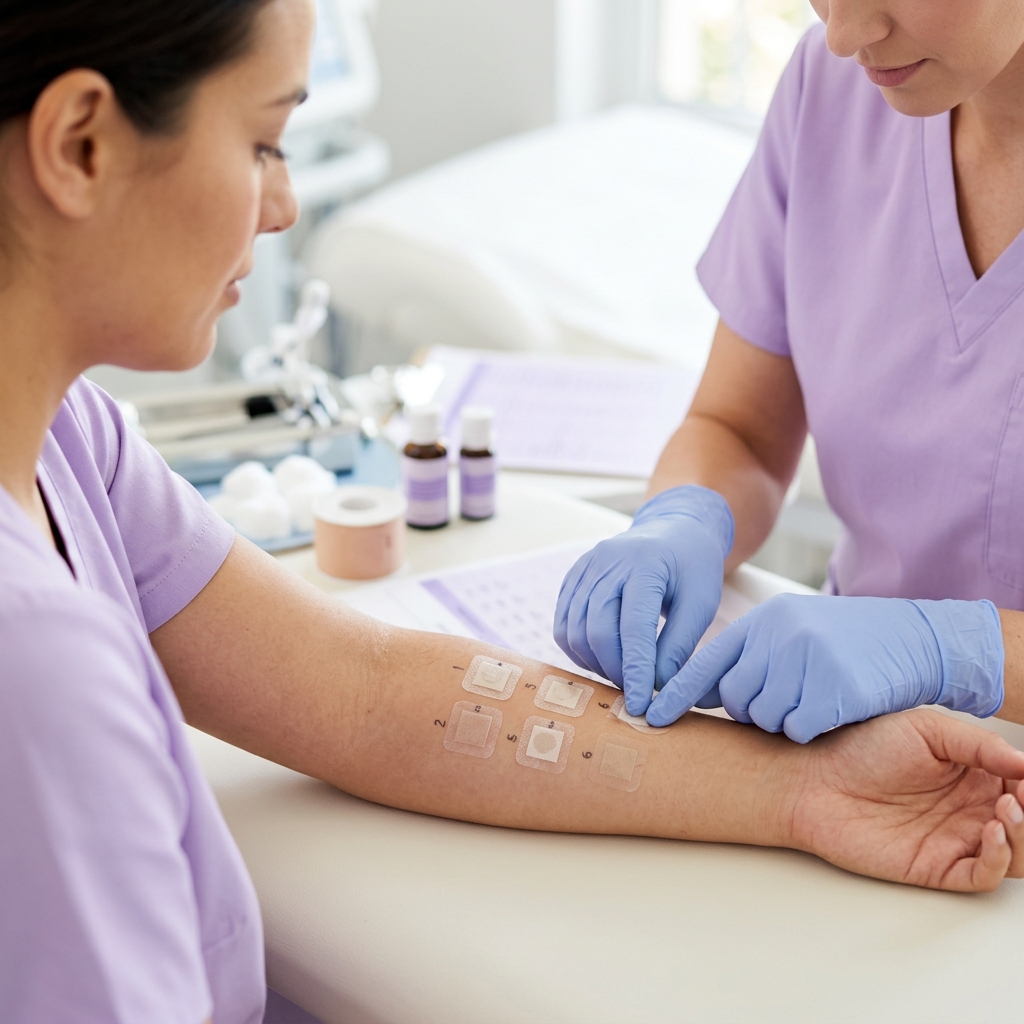
Patch testing is one of the most valuable tools available for managing skin allergies and sensitivities. Whether you are trying to identify a specific product causing reactions or want to safely introduce new products into your routine, understanding how to patch test properly can save you from uncomfortable allergic reactions and help you build a reliable list of safe products. This guide covers both at-home patch testing and professional patch testing performed by dermatologists.
What Is Patch Testing?
Patch testing is a method of identifying substances that cause allergic contact dermatitis by applying small amounts of potential allergens to the skin and observing the reaction over a period of days. It is fundamentally different from prick testing (used for immediate-type allergies like hay fever) in that it detects delayed hypersensitivity reactions that develop over 24 to 96 hours. This delayed response pattern is exactly how acrylate allergies and many cosmetic ingredient sensitivities manifest, making patch testing the appropriate diagnostic method.
The basic principle is straightforward: apply a small amount of the test substance to a small area of skin, typically on the upper back or inner arm, secure it in place, leave it for a defined period, and then observe the skin for signs of reaction. The timing is critical because delayed reactions may not appear until two to four days after exposure, which is why patch testing requires patience and careful observation over multiple days.
At-Home Patch Testing
At-home patch testing is a practical way to check whether a specific skincare or cosmetic product is safe for your skin before using it on your face or body. While it cannot diagnose specific allergies (that requires professional patch testing with pure allergens), it can effectively identify whether a particular product formulation causes a reaction for you.
To perform an at-home patch test, start by choosing a test area. The inner forearm is a common choice because the skin is relatively thin and sensitive, making it a good predictor of facial reactions. Alternatively, the area behind the ear or on the upper back can be used. Clean the test area with plain water and pat dry, do not apply any other products to the area during the testing period.
Apply a small amount of the product (about the size of a pea) to the test area. For liquid products like serums or toners, you can apply a few drops to a cotton pad and tape it to the skin. For solid products like creams or balms, apply a thin layer directly. Cover the area with a waterproof adhesive bandage or patch to keep the product in place and prevent it from rubbing off. Leave the patch in place for 24 to 48 hours.
After removing the patch, observe the test area at 24 hours, 48 hours, and 72 hours after initial application. Look for any signs of reaction including redness extending beyond the application site, itching or burning at the test area, small bumps, blisters, or welts, swelling, or dry, flaky skin. A mild pinkness that fades within a few hours is usually not a concern and may simply be irritation from the adhesive. However, any reaction that persists beyond 24 hours, intensifies over time, or includes bumps, blisters, or intense itching suggests an allergic response.
Professional Patch Testing
If you suspect you have a specific allergy (such as to acrylates) but cannot identify the exact trigger through at-home testing, professional patch testing performed by a dermatologist or allergist is the gold standard. Professional patch testing uses standardised panels of pure allergens, allowing for precise identification of the specific substances causing your reactions.
The most commonly used system is the North American Contact Dermatitis Group (NACDG) standard series, which includes approximately 70 allergens that represent the most common causes of contact dermatitis. Additional specialised panels are available for specific allergen categories, including acrylates and methacrylates (particularly relevant for nail product and dental allergies), fragrance allergens, cosmetic preservatives, and metals.
During the procedure, small chambers containing minute amounts of each test allergen are taped to the skin on your back in two parallel rows. The patches remain in place for 48 hours. After removal, the dermatologist examines your skin and marks any reactions. A second reading is typically performed 24 to 96 hours after patch removal, as some reactions take longer to develop. In some cases, a third reading at seven days may be recommended for late-appearing reactions.
Interpreting Results
Patch test reactions are graded on a standardised scale that helps distinguish between allergic reactions and simple irritation. A negative reaction shows no visible difference from normal skin. A weak (1+) reaction shows mild redness and possibly slight papules in the test area. A strong (2+) reaction shows obvious redness, papules, and small vesicles. An extreme (3+) reaction shows intense redness, large vesicles or bullae, and may extend beyond the test area.
Irritant reactions, which are non-allergic, can sometimes be confused with true allergic reactions. Irritant reactions tend to be more sharply demarcated, resolve more quickly after the allergen is removed, and do not spread beyond the application site. An experienced dermatologist can usually distinguish between irritant and allergic reactions based on their clinical appearance and timing.
Common Mistakes to Avoid
Several common mistakes can compromise the accuracy of patch testing. Testing on skin that is already irritated, sunburned, or affected by eczema can produce unreliable results. Testing too many products simultaneously makes it impossible to identify which product caused a reaction if one occurs. Removing the patch too early (before 24 hours) may miss delayed reactions that have not yet developed. Applying too much product can cause irritation that mimics an allergic reaction. Failing to observe at multiple time points can miss reactions that appear later. And using expired or degraded products may produce reactions that would not occur with fresh product.
Another important consideration is that patch testing only identifies contact allergies (Type IV hypersensitivity). It does not test for immediate-type allergies (Type I hypersensitivity), food allergies, or intolerances. If you experience symptoms like hives, swelling, or difficulty breathing immediately after exposure to a product, this is a medical emergency that requires immediate attention and is not something that can be diagnosed through patch testing.
Building Your Safe Product List
Over time, patch testing allows you to build a personal list of products and ingredients that are safe for your skin. This list becomes an invaluable resource for shopping and simplifying your skincare routine. Many people find it helpful to maintain a digital list (on their phone or computer) of verified safe products, along with the date they were tested and any notes about the testing conditions.
Remember that product formulations can change without notice, so periodically re-testing products that you use regularly is a good practice, especially if you notice a change in the product's appearance, scent, or texture. If a product that was previously safe starts causing reactions, check the ingredient list for changes and consider patch testing again to confirm the new formula is safe.